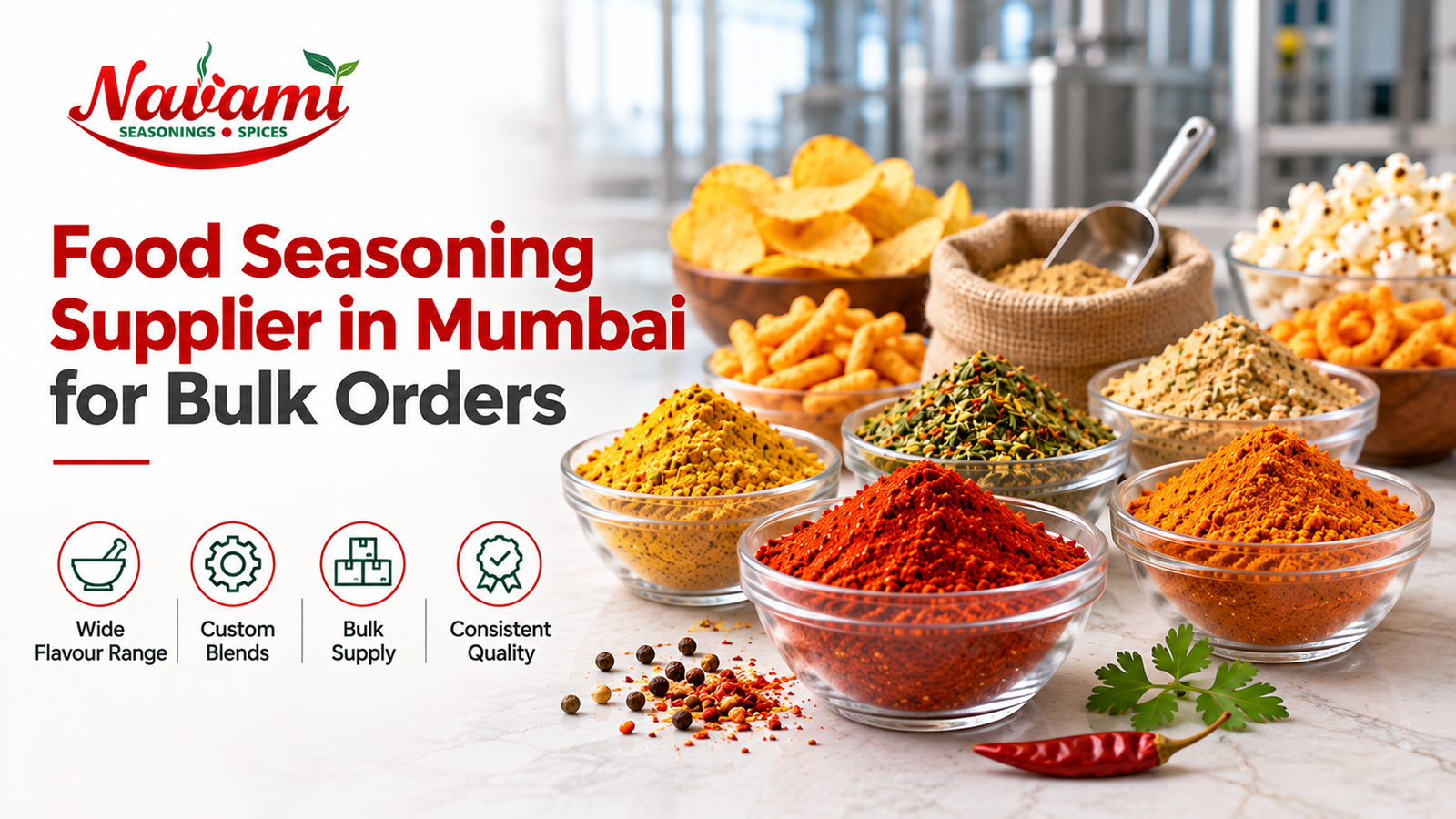
For food manufacturers, selecting the right seasoning supplier is an important part of maintaining product quality, developing new flavours, and managing regular production. Whether you manufacture packaged snacks, namkeen, potato chips, makhana, popcorn, roasted nuts, or processed food products, the seasoning you use directly influences the taste and overall appeal of your products.
If you are searching for a reliable food seasoning supplier in Mumbai for bulk orders, you need to consider more than the price per kilogram. Product consistency, ingredient quality, flavour options, manufacturing capabilities, minimum order quantities, and delivery schedules are equally important.
Mumbai is an important commercial hub for food processing businesses, packaged food brands, and ingredient suppliers. Working with a suitable seasoning partner can help businesses source the right flavour blends for their manufacturing requirements.
This guide explains how to evaluate food seasoning suppliers in Mumbai, what to check before placing bulk orders, and how to select a supplier for long-term business requirements.
Why Is Choosing the Right Food Seasoning Supplier Important?
Seasonings are essential ingredients in many commercial food products. They help create distinctive flavour profiles, improve product appeal, and provide consistency across different production batches.
For food manufacturers, an unreliable seasoning supply can create challenges such as inconsistent taste, production delays, and difficulties maintaining product specifications.
Choosing the right supplier can help businesses with:
-
Consistent product quality: Maintain similar flavour characteristics across production batches.
-
Bulk procurement: Source seasoning quantities according to manufacturing requirements.
-
Flavour variety: Explore different seasoning options for new and existing products.
-
Product development: Evaluate suitable flavour combinations for new food applications.
-
Production planning: Coordinate recurring orders and inventory requirements.
-
Quality documentation: Obtain relevant product specifications and ingredient information.
A suitable supplier should understand your product application and be able to discuss the commercial and technical requirements associated with your order.
What Types of Food Seasonings Can You Source in Bulk?
Food seasoning requirements vary depending on the product category, manufacturing process, and target consumers. Before approaching a supplier, identify the type of seasoning you require.
1. Potato Chips Seasoning
Potato chips manufacturers require seasoning blends that complement the base ingredient and provide a distinctive taste.
Popular flavour directions include:
-
Peri peri
-
Cheese
-
Tomato
-
Chilli
-
Onion
-
Masala
-
Tangy and spicy flavours
The seasoning should be suitable for the chip's surface and application method. Manufacturers should evaluate flavour distribution, adhesion, and consistency through production trials.
Explore potato chips seasoning solutions.
2. Namkeen and Fryums Seasoning
Namkeen and fryums manufacturers often require traditional Indian masala blends, spicy seasonings, tangy profiles, and customised flavour combinations.
The seasoning requirements may differ depending on the product's shape, texture, ingredients, and coating process.
For example, pipe-shaped fryums, extruded snacks, and traditional namkeen products may require different seasoning characteristics.
Explore fried and extruded snack seasoning solutions.
3. Makhana Seasoning
Makhana manufacturers and packaged snack brands are increasingly exploring different flavour combinations to expand their product ranges.
Common flavour directions include spicy, tangy, cheese-inspired, and traditional masala profiles.
When sourcing makhana seasoning in bulk, consider the product's light texture, seasoning adhesion, flavour intensity, and intended storage conditions.
Discover makhana seasoning solutions.
4. Popcorn Seasoning
Popcorn manufacturers require seasoning blends that complement the product while providing an appealing taste and aroma.
Cheese, butter-style, chilli, and other savoury flavour profiles may be considered depending on the target market.
Before placing a bulk order, evaluate the seasoning on the actual popcorn product to assess its distribution and performance.
Explore popcorn seasoning solutions.
5. Nuts and Peanut Seasoning
Roasted peanuts, almonds, cashews, and other savoury nut products may require spicy, tangy, savoury, or customised seasoning blends.
The seasoning must be suitable for the base ingredient and its processing method. Oil content, surface characteristics, and coating techniques can influence the final application.
Learn more about nuts seasoning solutions.
6. Baked and Extruded Snack Seasoning
Baked snacks and extruded food products have different manufacturing and textural characteristics from conventional fried snacks.
Their seasoning requirements depend on the product composition, surface texture, and application method.
Food manufacturers should conduct product trials to determine whether the selected seasoning delivers the expected flavour and coating performance.
Explore baked and extruded snack seasoning solutions.
7. Soup Premixes and International Flavours
Food processing companies manufacturing convenience foods, soups, and internationally inspired products may require specialised seasoning and flavour combinations.
Chinese and Italian-inspired flavours, for example, can be considered for suitable food applications depending on the formulation and target market.
Explore soup premix solutions and international flavour solutions.
How to Choose the Right Food Seasoning Supplier in Mumbai
Selecting a supplier for bulk seasoning requirements involves evaluating several factors. The following considerations can help you make an informed decision.
1. Check Product Range and Industry Experience
Start by reviewing the supplier's product categories and experience with different food applications.
A supplier familiar with snack seasonings may better understand the requirements of potato chips, makhana, popcorn, and extruded snacks.
Ask whether the supplier can provide seasoning options for your specific product and discuss its experience with similar applications.
2. Evaluate Flavour Development Capabilities
If your business wants to introduce new products, you may need customised seasoning blends rather than standard flavour options.
Discuss whether the supplier can support:
-
Existing seasoning requirements.
-
Modified flavour profiles.
-
Custom seasoning development.
-
Different spice and tanginess levels.
-
Application-specific formulations.
-
Sample development and evaluation.
Provide a clear description of your desired flavour, product composition, and target consumers to help the supplier understand your requirements.
3. Review Quality Standards and Documentation
Quality is an important consideration when sourcing ingredients for commercial food production.
Before finalising a supplier, ask about its quality assurance processes, raw material controls, batch consistency, traceability, and applicable food safety practices.
Depending on your requirements, request relevant documents such as:
-
Product specification sheets.
-
Ingredient declarations.
-
Allergen information.
-
Technical data sheets.
-
Shelf-life information.
-
Applicable food safety certificates.
Verify that the documentation is relevant to the product being supplied and meets your business requirements.
You can also review the available information on the Navami Flavours accreditation page.
4. Compare Minimum Order Quantities and Bulk Pricing
Different suppliers may have different minimum order quantities depending on the formulation, packaging, and production requirements.
When requesting a quotation, ask for the following details:
|
Commercial Factor |
What to Confirm |
|---|---|
|
Price per kg |
Cost based on the required quantity |
|
Minimum order quantity |
Lowest accepted order volume |
|
Sample availability |
Whether samples are available for testing |
|
Packaging |
Available pack sizes and materials |
|
Production lead time |
Expected order processing time |
|
Delivery charges |
Transportation and logistics costs |
|
Payment terms |
Advance payment or agreed credit terms |
|
Repeat orders |
Terms for recurring supply |
Do not select a supplier based only on the lowest quotation. Compare the product specifications, recommended usage rate, flavour performance, and total delivered cost.
5. Request Samples Before Placing Bulk Orders
A seasoning blend may taste different when tested independently compared with when it is applied to the finished food product.
Request samples and conduct trials using your actual manufacturing process.
During evaluation, check:
-
Flavour intensity.
-
Aroma and taste balance.
-
Seasoning distribution.
-
Adhesion to the product.
-
Compatibility with the production process.
-
Performance under intended storage conditions.
Involve your production and quality teams before approving a seasoning for regular manufacturing.
6. Check Bulk Supply and Production Capacity
For businesses with recurring seasoning requirements, supply reliability is essential.
Discuss your expected monthly consumption, order frequency, production schedules, and future demand with the supplier.
If your business plans to expand its product range or increase production, understand whether the supplier can accommodate changing quantities.
Confirm lead times and repeat-order arrangements before entering into a long-term supply relationship.
7. Evaluate Communication and Customer Support
A reliable supplier should communicate clearly about product specifications, order status, pricing, and delivery schedules.
This becomes particularly important when you need to modify a flavour, request additional samples, or address a quality concern.
Before finalising the supplier, understand how product revisions, technical queries, and complaints will be handled.
What Information Should You Share When Requesting a Bulk Seasoning Quotation?
Providing accurate information helps a seasoning supplier understand your requirements and prepare a suitable quotation.
When contacting a food seasoning supplier in Mumbai, share the following details:
|
Requirement |
Information to Provide |
|---|---|
|
Company details |
Business name and type of food manufacturing |
|
Product category |
Chips, makhana, popcorn, namkeen, fryums, nuts, etc. |
|
Flavour requirement |
Peri peri, tandoori, cheese, masala, or customised flavour |
|
Application method |
How the seasoning will be applied |
|
Initial quantity |
Estimated requirement for the first order |
|
Monthly consumption |
Expected recurring seasoning requirement |
|
Product specifications |
Ingredient, allergen, and other relevant requirements |
|
Packaging |
Preferred pack size and storage requirements |
|
Delivery location |
Mumbai or the relevant delivery address |
If you are developing a new food product, also share the manufacturing process and desired flavour characteristics. This can help the supplier evaluate suitable seasoning options.
Why Consider Navami Flavours for Food Seasoning Requirements?
Navami Flavours offers seasoning and flavour-related product categories for commercial food applications.
Its website features solutions for potato chips, makhana, popcorn, nuts, fried and extruded snacks, baked and extruded snacks, soup premixes, and international flavours.
Food manufacturers looking for a food seasoning supplier in Mumbai can explore these product categories when evaluating potential suppliers for their business requirements.
Before placing an order, discuss your product application, desired flavour profile, estimated quantity, sample requirements, and relevant quality specifications.
You can learn more about the company through its About Us page and review the available information on its accreditation page.
For product enquiries, bulk supply requirements, and pricing discussions, visit the Navami Flavours contact page.
Common Mistakes to Avoid When Choosing a Seasoning Supplier
Food manufacturers should avoid making supplier decisions based only on price or availability.
Here are some common mistakes to watch out for:
-
Choosing only by price: A lower price does not automatically mean better value. Compare quality, usage rate, and product performance.
-
Skipping sample trials: Always evaluate the seasoning in your actual food product before approving bulk quantities.
-
Ignoring product specifications: Check ingredient details, allergens, and relevant technical documents.
-
Not confirming MOQ: Understand the minimum order quantity before finalising procurement.
-
Overlooking supply schedules: Confirm production and delivery timelines to avoid interruptions.
-
Not discussing repeat orders: Establish how future orders and product specifications will be managed.
A structured supplier evaluation process can reduce procurement risks and support more consistent food production.
Conclusion
Choosing the right food seasoning supplier in Mumbai is an important decision for businesses involved in commercial food manufacturing.
Whether you manufacture potato chips, namkeen, fryums, makhana, popcorn, roasted nuts, or processed food products, your seasoning supplier should understand your application, quality expectations, and bulk procurement requirements.
Compare suppliers based on product range, flavour development capabilities, quality documentation, pricing, minimum order quantities, and supply reliability. Request samples and conduct product trials before committing to regular bulk orders.
If your business is looking for seasoning solutions for commercial food production, explore Navami Flavours and contact the team to discuss your requirements.
Frequently Asked Questions
1. Where can I find a food seasoning supplier in Mumbai for bulk orders?
You can approach specialised seasoning manufacturers and food ingredient suppliers serving Mumbai. Evaluate their product range, quality practices, sample availability, minimum order quantities, pricing, and ability to support recurring bulk requirements.
2. What should I check before buying food seasoning in bulk?
Check the seasoning's ingredient specifications, flavour consistency, product application, sample performance, price per kilogram, MOQ, packaging, and delivery schedule. Conduct product trials before approving a bulk order.
3. Can food seasoning suppliers provide customised blends for manufacturers?
Some seasoning suppliers offer customised flavour development depending on their manufacturing capabilities and the intended food application. Share your product specifications, preferred flavour profile, processing method, and estimated quantity to discuss suitable options.