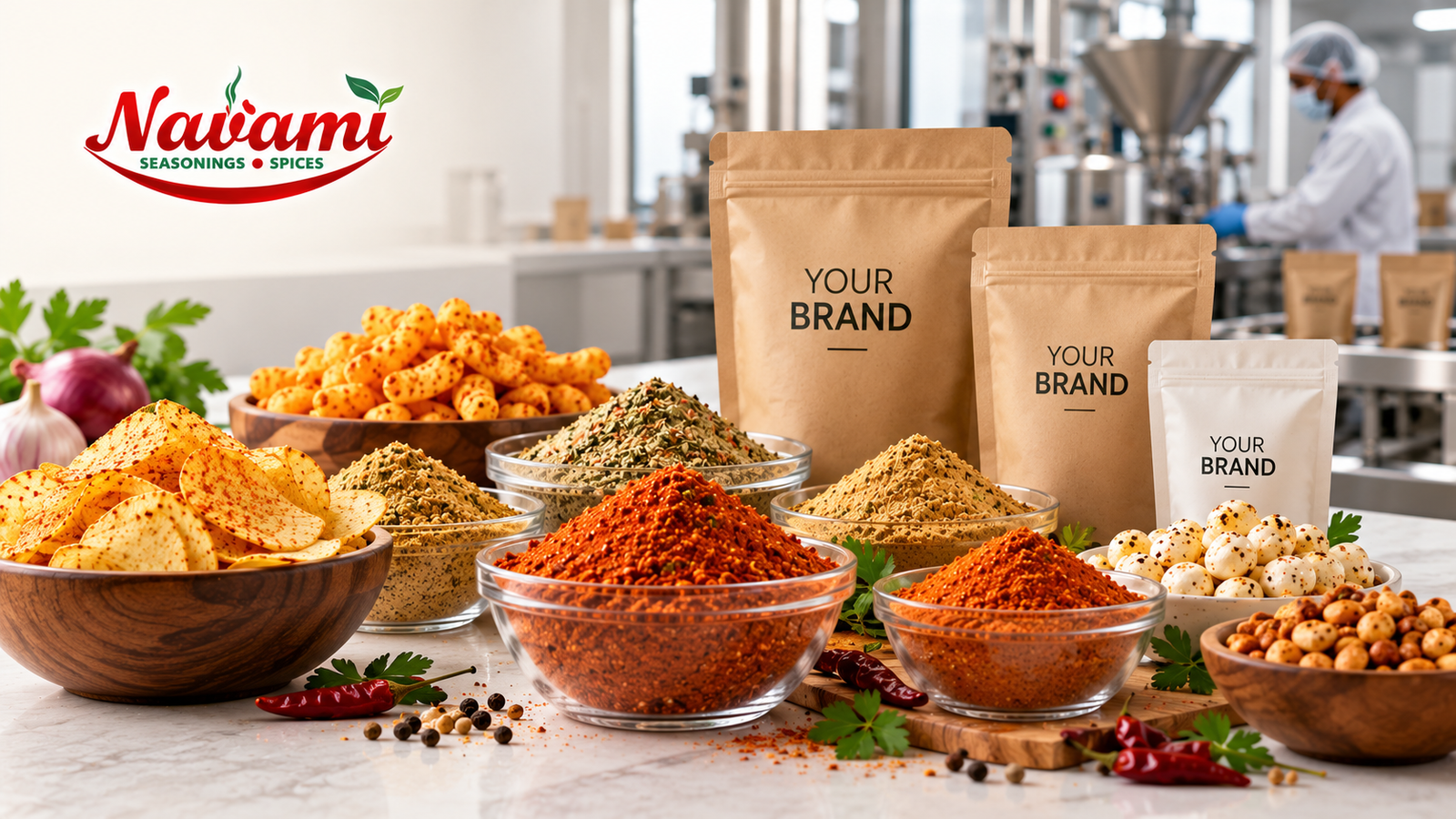
Food brands looking to launch or expand their product range need more than a good recipe. They also need reliable ingredient suppliers, consistent product quality, and a manufacturing partner that understands their commercial requirements. For businesses selling packaged snacks, namkeen, fryums, chips, makhana, and other savoury products, private-label seasoning can be an important part of product development.
If you are searching for a private label seasoning manufacturer in Mumbai, it is essential to understand how customised seasoning supply works, what to evaluate before selecting a supplier, and how to ensure that the seasoning meets your product specifications.
Private-label seasoning arrangements can help food businesses develop products under their own brand while sourcing seasoning blends from a specialist manufacturer. Depending on the supplier's capabilities, businesses may be able to discuss flavour customisation, bulk quantities, packaging requirements, and repeat orders.
This guide explains how to evaluate seasoning manufacturers in Mumbai and choose a suitable partner for your food business.
What Is Private Label Seasoning?
Private-label seasoning refers to seasoning products supplied for use in a business's own branded food products. Instead of manufacturing every seasoning blend internally, a food business can work with a seasoning supplier to source suitable formulations for its product range.
For example, a packaged snack brand may need peri peri seasoning for chips, tandoori seasoning for extruded snacks, or a customised masala blend for namkeen. The seasoning supplier provides the blend, while the food business uses it in its manufacturing process according to the agreed specifications.
The exact arrangement depends on the manufacturer's services and the commercial agreement.
Private-label seasoning may be relevant to:
-
Packaged snack brands.
-
Namkeen and fryums manufacturers.
-
Potato chips producers.
-
Makhana and popcorn brands.
-
Roasted nuts and peanut snack manufacturers.
-
Food processing companies.
-
Businesses developing new savoury food products.
Before proceeding, clarify whether you need an existing seasoning blend, a modified flavour profile, or a newly developed formulation.
Why Consider a Private Label Seasoning Manufacturer in Mumbai?
Mumbai is a major commercial centre for food businesses, distributors, manufacturers, and ingredient suppliers. Companies operating in Mumbai and nearby industrial areas may explore local suppliers to discuss product requirements, samples, commercial terms, and delivery arrangements.
Working with a suitable private-label seasoning partner can offer several potential advantages.
1. Develop Your Own Flavour Range
Food brands often want to differentiate their products through flavour. A seasoning manufacturer may help you evaluate existing blends or discuss customisation options based on your product and target market.
For example, a snack brand could explore spicy, tangy, cheesy, traditional Indian masala, or international-inspired flavours.
The final formulation should be selected after appropriate product trials.
2. Focus on Your Core Manufacturing and Branding Activities
Developing every seasoning blend internally can require additional expertise, equipment, ingredient sourcing, and quality-control processes.
Working with an external seasoning supplier allows your business to evaluate whether outsourcing this part of production is more suitable for its operations.
Your team can then focus on activities such as food manufacturing, packaging, distribution, sales, and brand development.
3. Support Repeat Production
Food manufacturers need their products to deliver a consistent flavour experience across batches.
A suitable seasoning supplier should be able to discuss product specifications, batch controls, quality checks, and repeat-order arrangements.
Ask how the manufacturer manages changes in raw materials and whether any formulation changes are communicated before implementation.
4. Explore Different Product Applications
A single food business may manufacture several products requiring different seasoning blends. Depending on the supplier's range, you may be able to discuss seasoning options for chips, makhana, popcorn, nuts, fried snacks, baked snacks, and extruded products.
Explore Navami Flavours' seasoning product categories to understand the applications covered on its website.
Which Food Products Can Use Private Label Seasoning?
The suitability of a seasoning blend depends on the food product, processing method, ingredients, and intended flavour profile. The following applications are useful starting points when evaluating suppliers.
1. Potato Chips and Packaged Snacks
Potato chips manufacturers may explore flavours such as chilli, tomato, cheese, masala, onion, and other savoury profiles.
The seasoning needs to complement the base product and perform appropriately during application. Sample trials help determine the required flavour intensity and coating performance.
Learn more about potato chips seasoning solutions.
2. Namkeen and Fryums
Namkeen and fryums manufacturers may require traditional Indian masala blends, spicy flavours, tangy profiles, or customised combinations.
When discussing private-label seasoning for these products, provide details about the product shape, surface characteristics, processing method, and expected production volume.
These details help the supplier understand your application requirements.
3. Makhana and Popcorn
Makhana and popcorn brands can explore different seasoning profiles to create product varieties for different consumer preferences.
Potential flavour directions include spicy, tangy, cheese-inspired, and other savoury options. The selected blend must suit the product's texture and application method.
Explore makhana seasoning solutions and popcorn seasoning solutions.
4. Peanuts and Roasted Nuts
Roasted nuts and peanut snacks may use spicy, tangy, savoury, or other customised seasoning blends.
Because nuts have different surface and oil characteristics from other snack products, manufacturers should evaluate seasoning performance in the actual application rather than assuming that the same blend will work equally well across all products.
Explore nuts seasoning solutions.
5. Baked and Extruded Snacks
Baked snacks and extruded products can require different seasoning characteristics depending on their texture, composition, and manufacturing process.
Discuss your product specifications and application method with the supplier before finalising a blend.
Explore baked and extruded snack seasoning solutions and fried and extruded snack seasoning solutions.
How to Choose the Right Private Label Seasoning Supplier in Mumbai
Selecting a supplier is an important decision because seasoning affects product taste, quality, and consumer experience. Consider these factors before placing an order.
1. Evaluate Product and Industry Experience
Look for a manufacturer that understands your food application. A supplier familiar with snack seasoning may be better equipped to discuss the requirements of chips, fryums, popcorn, or extruded snacks than a supplier whose product range focuses on different applications.
Ask about relevant product categories and sample availability.
2. Discuss Flavour Development Capabilities
Explain whether you need an existing flavour, a modified blend, or a customised formulation.
Share your preferred taste profile, spice level, aroma, base ingredient, and target consumer. If you have a reference sample, discuss whether the supplier can evaluate it and work towards a similar flavour direction.
Do not assume that every manufacturer offers complete formulation development. Confirm the scope of customisation before proceeding.
3. Review Quality Assurance Practices
Ask about raw material controls, batch consistency, traceability, ingredient specifications, allergen management, and applicable food safety documentation.
Depending on your product and market, you may also need ingredient declarations, technical data sheets, shelf-life information, and other supporting documents.
Review relevant credentials and verify that they apply to the products and manufacturing arrangements being discussed. You can refer to the Navami Flavours accreditation page when evaluating its available information.
4. Confirm Minimum Order Quantity and Pricing
Minimum order quantities vary according to the seasoning formulation, packaging, production process, and supplier.
Before placing an order, request a quotation covering:
-
Minimum order quantity (MOQ).
-
Price per kilogram.
-
Sample availability and cost.
-
Packaging options.
-
Production lead time.
-
Delivery charges.
-
Payment terms.
-
Repeat-order conditions.
Compare quotations using the same product specifications to make the evaluation meaningful.
5. Request Samples Before Bulk Production
A flavour description alone cannot establish whether a seasoning will work for your product.
Test samples in the actual food application and assess taste, aroma, flavour intensity, coating uniformity, and compatibility with the manufacturing process.
Document the results and involve the relevant product development and quality teams before approving the blend.
6. Understand Packaging and Branding Arrangements
Private-label supply arrangements can differ from one manufacturer to another. Some suppliers may provide bulk seasoning for use in your own production, while other arrangements may involve specific packaging or labelling services.
If you require branded seasoning packs rather than bulk ingredients for your production line, clarify this requirement at the beginning.
Discuss packaging materials, labelling responsibilities, product specifications, and regulatory requirements before confirming the commercial arrangement.
7. Assess Long-Term Supply Reliability
If you expect regular orders, discuss forecast volumes, lead times, production capacity, and the process for repeat orders.
A suitable supplier should communicate clearly about availability, specification changes, and quality concerns. Confirm these expectations before entering into a long-term supply agreement.
What Information Should You Provide When Requesting a Quotation?
A clear enquiry helps a seasoning manufacturer understand your requirements and respond with relevant information.
| Information Required | What to Share |
|---|---|
| Business details | Company name and type of food business |
| Product category | Chips, namkeen, fryums, makhana, popcorn, nuts, or another product |
| Desired flavour | Peri peri, tandoori, masala, cheese, tangy, or a custom profile |
| Application method | How the seasoning will be applied |
| Initial order quantity | Expected requirement for the first order |
| Monthly demand | Estimated recurring volume |
| Customisation needs | Existing blend, modified flavour, or new formulation |
| Quality requirements | Relevant ingredient, allergen, and documentation requirements |
| Packaging | Bulk packs or another agreed format |
| Delivery location | Mumbai or the relevant delivery address |
If you are launching a new product, include details about the manufacturing process and intended storage conditions. This can help the supplier assess whether a proposed seasoning is appropriate for your application.
Why Consider Navami Flavours for Private Label Seasoning Requirements?
Navami Flavours offers seasoning and flavour-related product categories for food applications, including potato chips, makhana, popcorn, nuts, fried and extruded snacks, baked and extruded snacks, soup premixes, and international flavours.
Food businesses evaluating seasoning manufacturers in Mumbai can explore the available product categories and discuss their specific requirements with the company.
When making an enquiry, share your intended product, desired flavour profile, application method, estimated monthly volume, and sample requirements. This information can help establish whether the available seasoning options suit your business needs.
To learn more about the company, visit the About Us page or contact Navami Flavours to discuss your requirements.
Conclusion
Choosing a private label seasoning manufacturer in Mumbai requires careful evaluation of product expertise, flavour development capabilities, quality practices, pricing, minimum order quantities, and supply reliability.
Whether you manufacture chips, namkeen, fryums, makhana, popcorn, roasted nuts, or extruded snacks, identify your product requirements before comparing suppliers. Request samples, conduct product trials, and confirm the commercial terms before placing a bulk order.
A well-defined supplier relationship can help your business manage seasoning procurement and support consistent product development as your range grows.
If you are exploring seasoning solutions for your food business, visit Navami Flavours and contact the team to discuss your application and supply requirements.
Frequently Asked Questions
1. Where can I find a private label seasoning manufacturer in Mumbai?
You can research specialised seasoning manufacturers and food ingredient suppliers serving Mumbai. Compare their product categories, customisation capabilities, sample availability, quality documentation, minimum order quantities, and bulk supply arrangements before selecting a supplier.
2. Can a private label seasoning manufacturer develop custom flavours for my brand?
Some manufacturers offer flavour customisation or formulation development, depending on their capabilities and the intended food application. Share your product specifications, preferred flavour profile, processing method, and estimated order volume to discuss suitable options.
3. What should I check before ordering private label seasoning in bulk?
Confirm the product specifications, sample approval process, MOQ, pricing, packaging, quality documentation, production lead time, and repeat-order arrangements. Test the seasoning in your actual product before approving a bulk order.