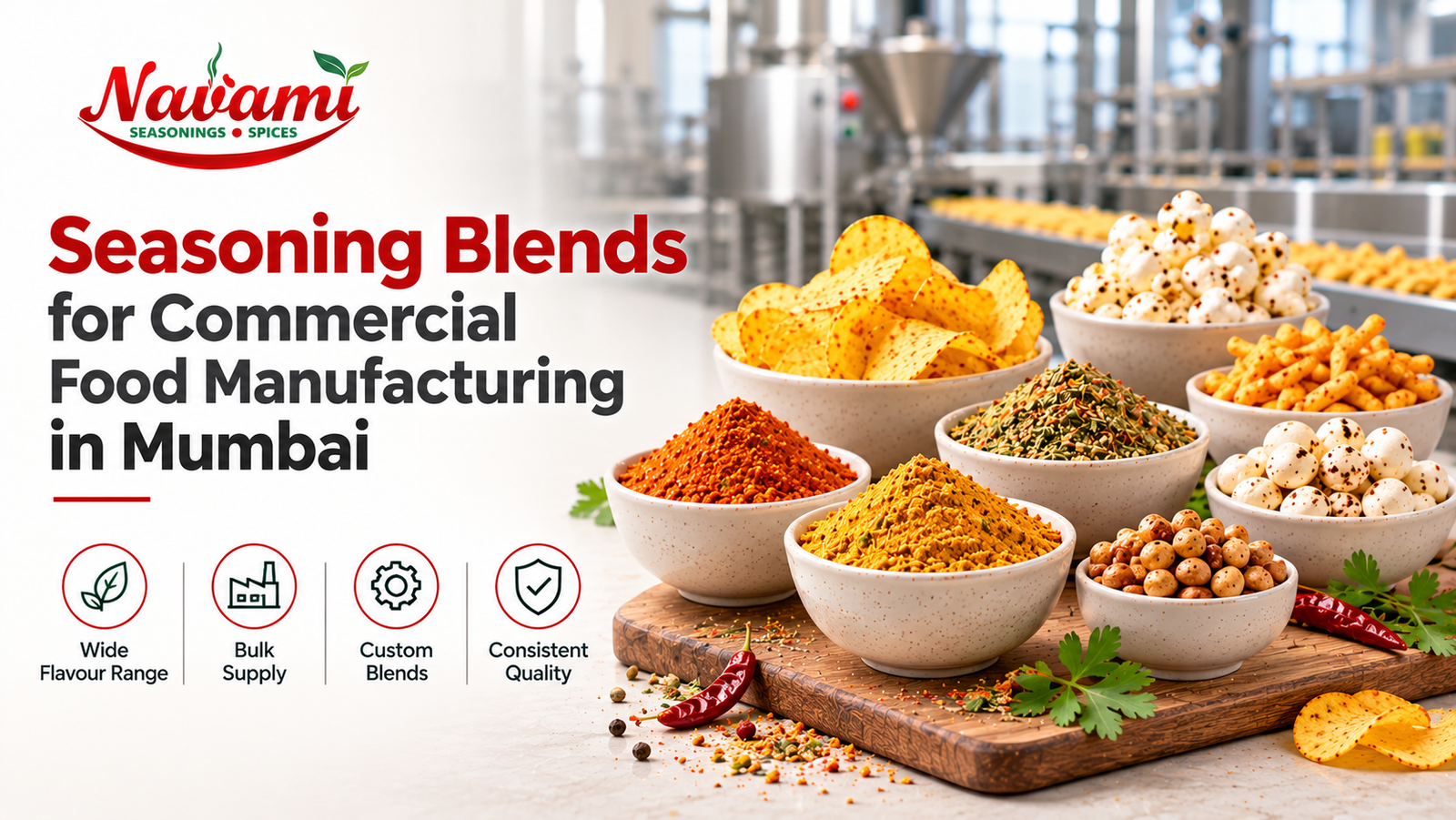
The flavour of a food product plays an important role in attracting customers and building brand recognition. For commercial food manufacturers, choosing the right seasoning blends is essential to maintaining product consistency, developing new flavours, and meeting consumer expectations.
Whether you manufacture potato chips, namkeen, fryums, makhana, popcorn, roasted nuts, baked snacks, or ready-to-eat food products, the seasoning you use can influence the overall taste and quality of your finished product.
If you are searching for seasoning blends in Mumbai for commercial food manufacturing, it is important to work with a supplier that understands your product application, production requirements, and quality expectations.
Mumbai has a growing network of food businesses, ingredient suppliers, and manufacturing companies. Choosing the right seasoning manufacturer can help businesses source suitable flavour blends for both regular production and new product development.
In this guide, we explore where food manufacturers can source seasoning blends, the different types available, and what to consider before selecting a supplier.
What Are Seasoning Blends?
Seasoning blends are combinations of spices, herbs, flavouring ingredients, and other permitted components developed to provide a particular taste and aroma to food products.
They are used across several food categories, including packaged snacks, processed foods, ready-to-eat products, and convenience foods.
Depending on the application, seasoning blends can deliver spicy, tangy, cheesy, savoury, smoky, herbal, or internationally inspired flavour profiles.
For commercial food manufacturers, seasoning blends offer several benefits:
-
Consistent flavour across production batches.
-
Opportunities to introduce new product varieties.
-
Convenience in sourcing pre-developed flavour combinations.
-
Application-specific formulations for different food products.
-
Better control over flavour intensity and product specifications.
-
Support for commercial-scale food production.
The right blend depends on the base ingredient, processing method, application technique, and desired consumer experience.
Where Can Food Manufacturers Buy Seasoning Blends in Mumbai?
Commercial food manufacturers generally source seasoning blends from specialised seasoning manufacturers, food ingredient suppliers, and flavour development companies.
When selecting a supplier, consider its product range, application knowledge, quality practices, production capacity, and ability to support recurring orders.
1. Directly from Seasoning Manufacturers
Purchasing directly from a seasoning manufacturer allows food businesses to discuss their requirements with the supplier responsible for producing the blends.
This can be useful when you need specific flavour profiles, product samples, technical specifications, or regular bulk quantities.
Look for manufacturers that understand your food category and can explain how their seasoning blends are intended to be used.
Explore Navami Flavours to learn about its seasoning and flavour product categories for food applications.
2. From Specialised Food Ingredient Suppliers
Some food ingredient suppliers offer seasoning products alongside other ingredients used in commercial food manufacturing.
These suppliers may be suitable for businesses looking for standard seasoning options. However, if your product requires a specialised flavour profile or application-specific formulation, check whether the supplier can support those requirements.
3. From Custom Flavour Development Manufacturers
Businesses launching new food products may need more than an existing seasoning blend.
A manufacturer offering flavour customisation may help evaluate different taste profiles based on the product, target consumers, and processing requirements.
Discuss the scope of customisation, sample development, minimum quantities, and commercial terms before selecting a supplier.
Types of Seasoning Blends Used in Commercial Food Manufacturing
Different food products require different seasoning characteristics. The following categories are commonly relevant to commercial food businesses.
1. Potato Chips Seasoning Blends
Potato chips manufacturers use seasoning blends to introduce different flavour varieties and differentiate their products.
Common flavour directions include:
-
Peri peri
-
Cheese
-
Tomato
-
Chilli
-
Onion
-
Traditional masala
-
Tangy and spicy profiles
The seasoning should be suitable for the chip's surface and application method. Manufacturers should evaluate flavour distribution, adhesion, and consistency through product trials.
Explore potato chips seasoning solutions.
2. Namkeen and Fryums Seasoning Blends
Namkeen and fryums manufacturers often require seasoning blends that deliver traditional Indian flavours or modern savoury profiles.
Depending on the product, requirements may include spicy masala, tangy seasoning, tandoori-inspired flavours, or other customised combinations.
For products such as pipe-shaped fryums and extruded snacks, the seasoning application method and product surface characteristics should be considered during selection.
Explore fried and extruded snack seasoning solutions.
3. Makhana Seasoning Blends
Makhana manufacturers and snack brands are exploring different flavours to expand their product ranges.
Seasoning options may include spicy, tangy, cheese-inspired, and traditional masala profiles.
The seasoning should be evaluated according to the product's texture, coating process, and desired flavour intensity.
Learn more about makhana seasoning solutions.
4. Popcorn Seasoning Blends
Popcorn manufacturers use seasoning blends to develop different savoury flavour varieties.
Cheese, butter-style, chilli, and other flavour profiles may be considered depending on the target market.
When selecting a blend, assess how it distributes across the popcorn and whether it performs well under the intended processing and storage conditions.
Explore popcorn seasoning solutions.
5. Nuts and Peanut Seasoning Blends
Roasted nuts, peanuts, and other savoury products require blends that complement the natural flavour of the base ingredient.
Manufacturers may explore spicy, tangy, savoury, and other customised flavour combinations.
The seasoning should be tested on the actual product because oil content, surface characteristics, and processing conditions can influence its performance.
Discover nuts seasoning solutions.
6. Baked and Extruded Snack Seasoning
Baked snacks and extruded food products have different textures and manufacturing requirements from conventional fried snacks.
Their seasoning blends should be selected according to the product composition, surface characteristics, and application method.
Food businesses should conduct trials to assess flavour distribution and compatibility with the production process.
Explore baked and extruded snack seasoning solutions.
7. Soup Premixes and International Flavour Blends
Commercial food manufacturers producing convenience foods, soups, and internationally inspired products may require specialised flavour combinations.
Chinese and Italian-inspired flavour profiles, for example, can be explored for different food applications depending on the product formulation.
You can explore soup premix solutions and international flavour solutions.
How to Select the Right Seasoning Blends for Your Food Products
Selecting a seasoning blend involves more than choosing a flavour name. Manufacturers should consider how the blend performs in the finished product.
1. Understand Your Product Application
Start by identifying the food product for which you need seasoning.
A seasoning suitable for potato chips may not necessarily work for roasted peanuts, makhana, or freeze-dried snacks.
Share details about your product composition, processing method, and application technique with the supplier.
2. Identify Your Desired Flavour Profile
Determine the taste experience you want to create.
Consider the following factors:
-
Spice intensity.
-
Saltiness.
-
Tanginess.
-
Aroma.
-
Savoury characteristics.
-
Flavour balance.
-
Target consumer preferences.
A clear flavour brief helps the manufacturer understand your expectations.
3. Check Ingredient Specifications
Review the ingredient composition and relevant product documentation before approving a seasoning blend.
Depending on your requirements, ask for ingredient specifications, allergen declarations, technical data sheets, and applicable food safety documentation.
Ensure that the selected seasoning meets your product and regulatory requirements.
4. Evaluate Flavour Consistency
Consistency is important for commercial food production. Customers expect a familiar taste whenever they purchase the same product.
Discuss the manufacturer's batch controls, raw material checks, quality assurance procedures, and process for managing formulation changes.
5. Conduct Product Trials
Request samples and evaluate them in your actual food product.
During testing, assess:
-
Flavour intensity.
-
Aroma.
-
Coating uniformity.
-
Seasoning adhesion.
-
Compatibility with the production process.
-
Performance under intended storage conditions.
Product trials help determine whether a seasoning blend is suitable before placing a bulk order.
6. Compare Pricing and Minimum Order Quantities
Seasoning costs should be evaluated in relation to the product's intended usage rate and overall production requirements.
Ask suppliers about:
-
Price per kilogram.
-
Minimum order quantity.
-
Sample availability.
-
Packaging options.
-
Production lead time.
-
Delivery charges.
-
Repeat-order terms.
Compare quotations based on similar specifications rather than selecting a supplier only because its initial price is lower.
What Should You Ask a Seasoning Supplier Before Placing a Bulk Order?
Before finalising a supplier, prepare a list of questions to understand its products and commercial arrangements.
| Questions | Why It Matters |
|---|---|
| What seasoning categories do you supply? | Helps identify suitable products for your application. |
| Can you provide samples? | Allows testing before bulk procurement. |
| Do you offer flavour customisation? | Helps with product development requirements. |
| What is your minimum order quantity? | Helps plan procurement and inventory. |
| Can you provide product specifications? | Supports quality and regulatory evaluation. |
| What are the production lead times? | Helps plan manufacturing schedules. |
| What packaging options are available? | Helps with storage and handling. |
| Can you support recurring bulk orders? | Important for long-term supply planning. |
Providing clear product specifications and estimated monthly requirements can also help suppliers prepare more relevant quotations.
Why Consider Navami Flavours for Seasoning Requirements?
Navami Flavours offers seasoning and flavour-related product categories for commercial food applications.
Its website features solutions covering potato chips, makhana, popcorn, nuts, fried and extruded snacks, baked and extruded snacks, soup premixes, and international flavours.
Food manufacturers looking for seasoning blends in Mumbai can explore these categories when evaluating potential suppliers for their production requirements.
Before proceeding with an order, discuss your intended application, desired flavour profile, sample requirements, estimated quantity, and relevant quality specifications.
You can learn more about the company through its About Us page and review the available information on its accreditation page.
For product enquiries, pricing, and supply discussions, visit the Navami Flavours contact page.
Conclusion
Finding the right seasoning blends for commercial food manufacturing requires a clear understanding of your product application, flavour expectations, and production requirements.
Whether you manufacture potato chips, namkeen, fryums, makhana, popcorn, roasted nuts, baked snacks, or convenience foods, choose a supplier that can provide suitable product options, relevant specifications, and reliable commercial support.
Always request samples, conduct product trials, review quality documentation, and confirm minimum order quantities before placing bulk orders.
If your business is looking for seasoning solutions in Mumbai, explore Navami Flavours and contact the team to discuss your requirements.
Frequently Asked Questions
1. Where can food manufacturers buy seasoning blends in Mumbai?
Food manufacturers can approach specialised seasoning manufacturers and food ingredient suppliers serving Mumbai. Compare their product categories, sample availability, quality documentation, minimum order quantities, pricing, and bulk supply capabilities before selecting a supplier.
2. What types of seasoning blends are used in commercial food manufacturing?
Common applications include potato chips seasoning, namkeen masala, fryums seasoning, makhana seasoning, popcorn seasoning, roasted nut seasoning, and blends for baked and extruded snacks. The right option depends on the product and its manufacturing process.
3. Can seasoning blends be customised for specific food products?
Some seasoning manufacturers offer customised flavour development depending on their capabilities and the intended application. Share your product specifications, desired flavour profile, processing method, and estimated quantity to discuss suitable options.